
Creating a gallery wall in your living room can transform the space into a personal expression of art, memories, and personality. This design choice allows for a stunning focal point that not only enhances the aesthetic appeal of your room but also invites conversation. Whether you prefer a curated collection of family photos, abstract art, or inspiring quotes, styling a gallery wall requires thoughtful planning and creativity. In this article, we will explore various styles and tips for crafting the perfect gallery wall for your living room.
Understanding the Basics of a Gallery Wall
A gallery wall is a curated collection of artwork and photographs displayed together on a wall. The key to a successful gallery wall lies in the arrangement, theme, and balance of the pieces. Before diving into specific design styles, it’s essential to understand how to create a cohesive look that reflects your personality.
Selecting a Theme
The first step in designing your gallery wall is selecting a theme. This could be based on color, subject matter, or a specific style. For instance, you might choose a monochromatic theme using various shades of blue or an eclectic mix of colorful pieces. The theme will guide your selection of artwork and help establish harmony within the display.
Choosing the Right Wall
Next, consider which wall in your living room will best accommodate the gallery. Ideal walls are often those that are large and visible but not too busy with furniture or decor. A blank wall above a couch or a fireplace works well, allowing the gallery wall to become a focal point without overwhelming the space.
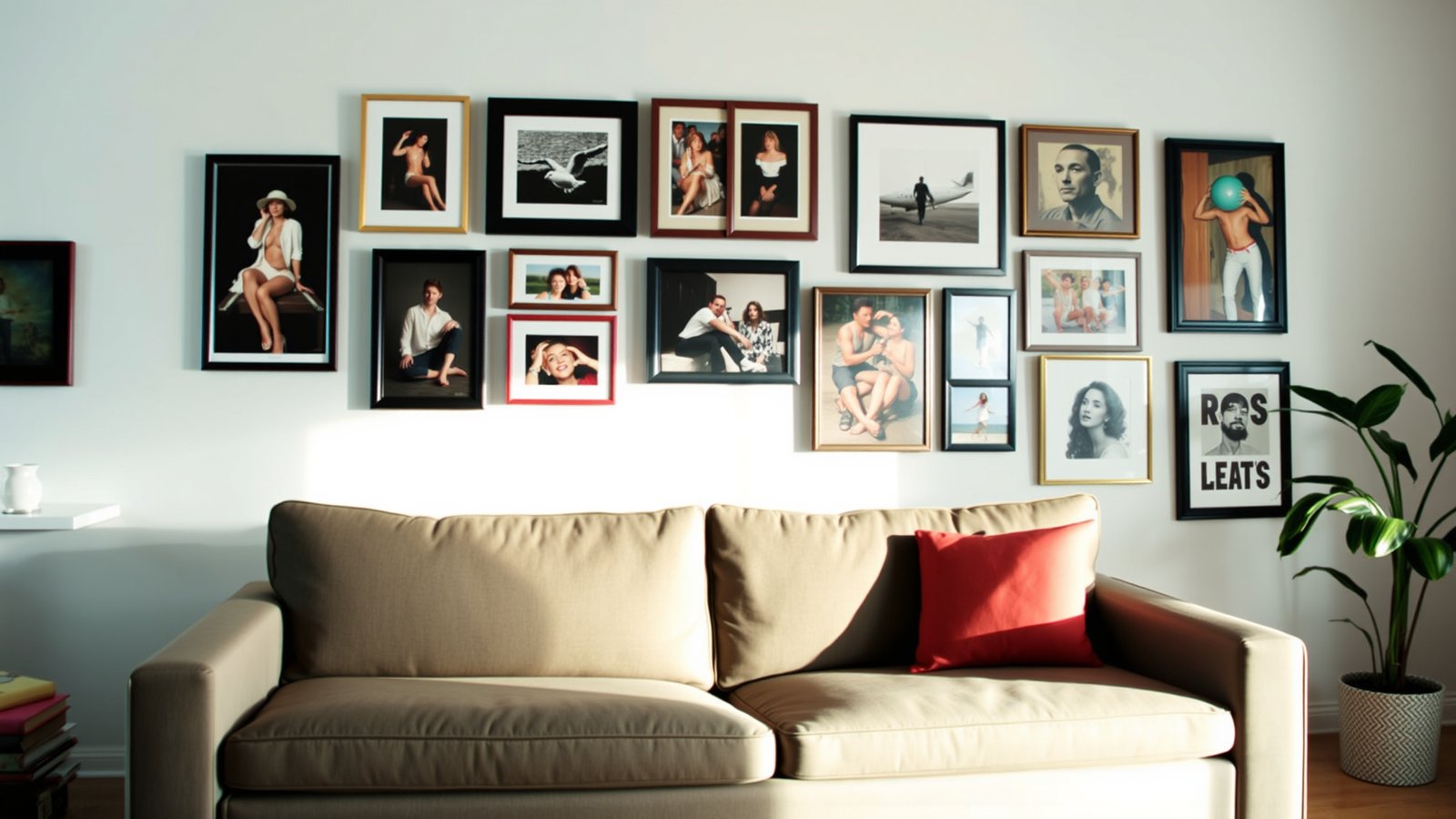
Gallery Wall Styles
Now that you understand the basics, let’s explore different styles to inspire your gallery wall creation.
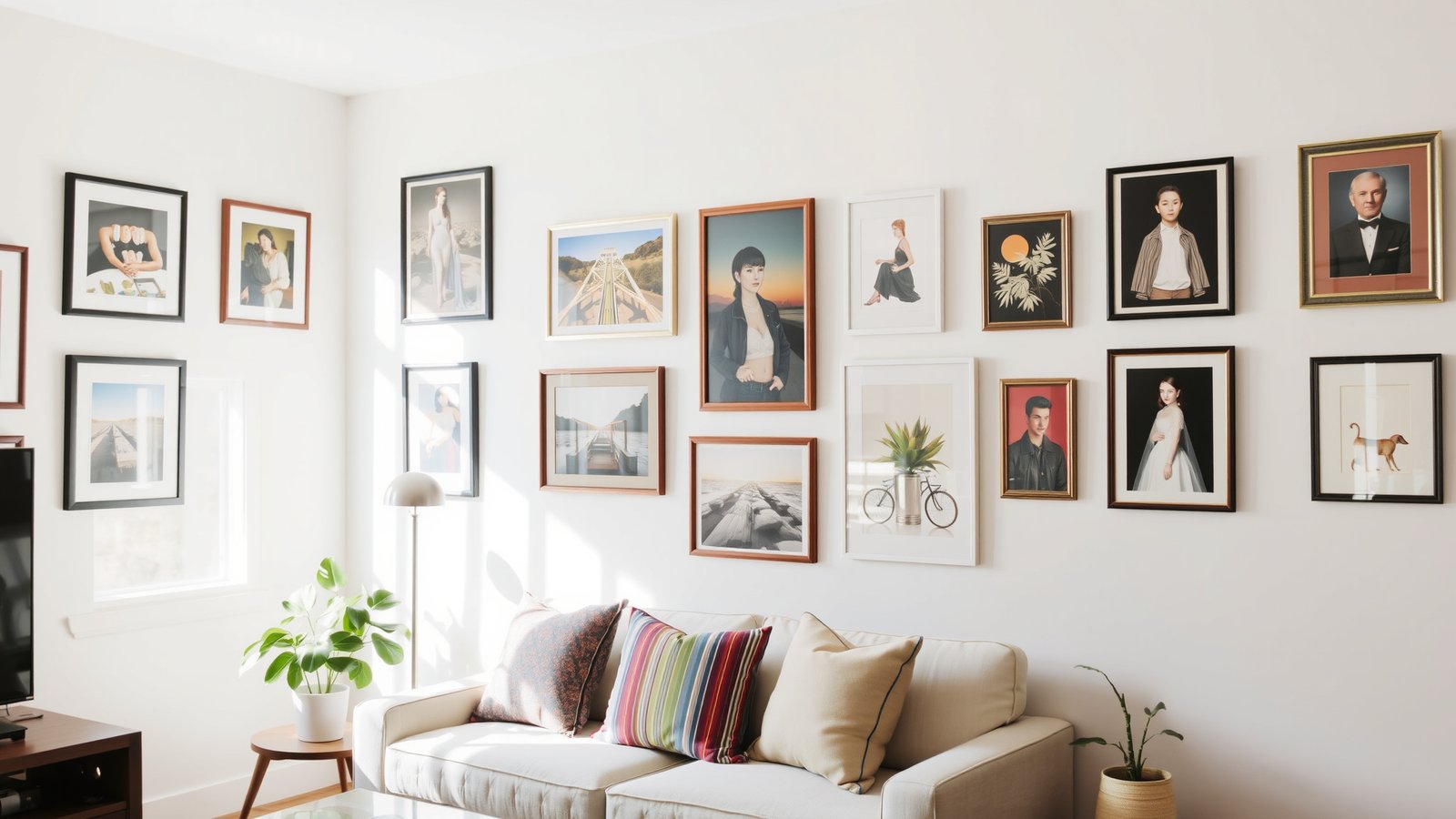
1. The Classic Grid Layout
The classic grid layout is perfect for those who appreciate order and symmetry. This style involves arranging frames in a tight grid pattern, creating a clean and organized look. To achieve this, select frames of the same size and color.
Example of a Grid Layout
For instance, you might use six identical black frames to display black-and-white photographs. This uniformity creates a striking visual impact and can enhance a minimalist aesthetic. Ensure that the spacing between the frames is consistent to maintain the grid appearance.
2. The Eclectic Style
The eclectic style embraces variety, allowing you to mix and match different frame styles, sizes, and colors. This approach is ideal for those who want to showcase diverse art pieces and personal memorabilia.
Creating an Eclectic Gallery Wall
To create an eclectic gallery wall, start by gathering a collection of items, including photographs, artwork, and even 3D objects like small shelves or decorative items. Arrange them on the floor first to visualize the layout before hanging them on the wall. The aim is to create a visually engaging display that reflects your personality.
3. The Thematic Wall
A thematic wall focuses on a specific concept or subject matter, such as travel, nature, or family. This style allows for storytelling through the images and can evoke emotion and nostalgia.
Implementing a Thematic Approach
For example, if you choose a travel theme, you might include maps, photographs from your journeys, and souvenirs displayed in shadow boxes. The key is to ensure that all items relate to the chosen theme, creating a cohesive narrative across the wall.
4. The Color Block Style
The color block style involves grouping artwork by color, creating a visually striking effect. This method can energize a space and is particularly effective in modern or contemporary living rooms.
How to Achieve a Color Block Gallery Wall
To implement this style, select pieces that feature similar colors or shades. For instance, you could arrange a series of artworks in varying shades of green alongside complementary colors like gold and white. This creates an eye-catching gradient effect that can enliven the room.
5. The Salon Style
Salon style is characterized by a more relaxed arrangement of artworks, often filling an entire wall. This style allows for greater creativity and can include various frame styles and art types.
Designing a Salon Style Gallery Wall
To design a salon-style wall, start by selecting a large variety of pieces, including paintings, photographs, and even decorative plates. Hang them in an organic arrangement, allowing the artwork to overlap slightly. This creates a casual yet curated look that can make a bold statement in your living room.
6. The Personal Story Wall
A personal story wall is an excellent way to showcase your family’s journey and memories. This style often combines photographs, letters, and memorabilia into a cohesive narrative.
Crafting a Personal Story Wall
To create this type of gallery wall, gather significant items like family portraits, handwritten letters, and meaningful quotes. Arrange them in a way that tells a story, perhaps chronologically or thematically. This not only personalizes your space but also serves as a wonderful conversation starter.
FAQs
What is the best way to arrange a gallery wall?
The best way to arrange a gallery wall is to lay out the pieces on the floor first, experimenting with different arrangements before hanging them. This allows you to visualize the space and make adjustments easily.
How do I choose the right frames for my gallery wall?
Choose frames that complement your theme and the artwork. You can opt for matching frames for a cohesive look or mix different styles for an eclectic feel. Consider the color and material of the frames as well.
How high should I hang my gallery wall?
A general rule is to hang your artwork at eye level, which is about 57 to 60 inches from the floor to the center of the gallery. This height creates a comfortable viewing experience.
Can I use different sizes of artwork in a gallery wall?
Yes, using different sizes can add visual interest to your gallery wall. However, ensure that there is a unifying theme or color palette to maintain balance in the arrangement.
Conclusion
Styling a gallery wall in your living room can be an exciting and rewarding project that adds character and depth to your space. Whether you prefer a structured grid layout or an eclectic mix of pieces, the key is to express your personality and tell a story through your chosen artworks. By following the guidelines and examples provided, you can create a stunning gallery wall that enhances your living room and reflects your unique style.